An Archetypal Molding of Aminata’s Story

Literature is more than just storytelling. If you read very carefully, you’ll start to see recurring patterns and symbols of characters and situations. These patterns are called archetypes and they bring an aspect of realism to literature that help the readers feel connected to the story they are reading.
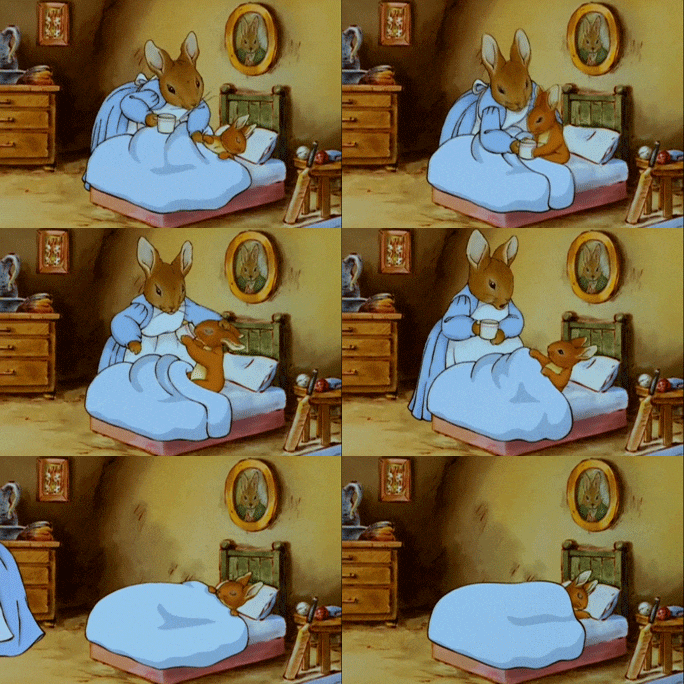
– Typical Mother Figure (Photo by Giphy)

For those of you that don’t recall, I read The Book of Negroes and at this point in the novel, Aminata has been sold to another master, Solomon Lindo (Hill 188). In terms of archetypal characters, Dolly, her owner’s only other slave, is the mother figure at this point in the story since Aminata no longer has her mom in her life, and she was taken away from Georgia, who was her mother figure at Appleby’s plantation. Dolly is the character who takes care of Aminata and helps her maintain her mental strength. For example, when Aminata finds herself crying one night, Dolly wakes up and puts her arm around her, saying, “What’s the matter, honey chile? One day your man come back and you start all over again” (211). Aminata also says at one point, “She fussed over me like a mother, cooking my meals and cleaning my clothes, and whenever I had given her some of the things that came from my work as a self-hire midwife – a miniature box made out of cherry wood, a small bottle of West Indian rum – her face had lit up like that of a child” (243). Aminata seems to admire and adore this woman. She appreciates all of her help and really looks up to her like a mother. And just like any other mother figure, Dolly is selfless and compassionate toward Aminata. For example, she never complains that Lindo favours her over Dolly and she always asks Aminata how she can help her, even if she usually can’t do much to help but talk.

– A Page From the Book of Negroes (Photo by PBS)

Another very obvious archetypal character is Aminata’s. As the heroine, she is kindhearted, honest, humble, and has a passion for justice. I remember that at one point in the novel, she says, “When it comes to understanding others, we rarely tax our imaginations” (425). This shows her perspective on the world and her undying compassion and empathy for others. She also says to a white man, “If I spent my time hating, my emotions would have been spent long ago, and I would be nothing more than an empty cowrie shell” (418). She has such a pure and loving heart that she is able to look at the people who stripped her way from her family and friends without feeling hatred. This is what defines a character as being the hero. She is able to put her feelings aside and still act in a respectable manner.

And just like any heroine, she is constantly trying to fight the evil that surrounds her. She runs away from Lindo (255) to free herself from slavery and then she registers her name, along with many other negroes, in the “Book of Negroes,” a document allowing blacks to be freed and taken on ships to Nova Scotia (302). She didn’t have to do this, but she chose to be part of something that would change the lives of so many Africans, since she was literate and could.

I believe that Aminata’s character is supposed to represent the morals and values that society strives to have. As the heroine, she shows us that we should be strong and humble, even in the face of adversity. Like most heroes that you may know, she has suffered an extreme amount of loss and pain fighting for what she truly wanted. Her constant battle for freedom represents how all of us, when we are truly dedicated to something, will do anything we can to achieve what it is that we want to achieve.
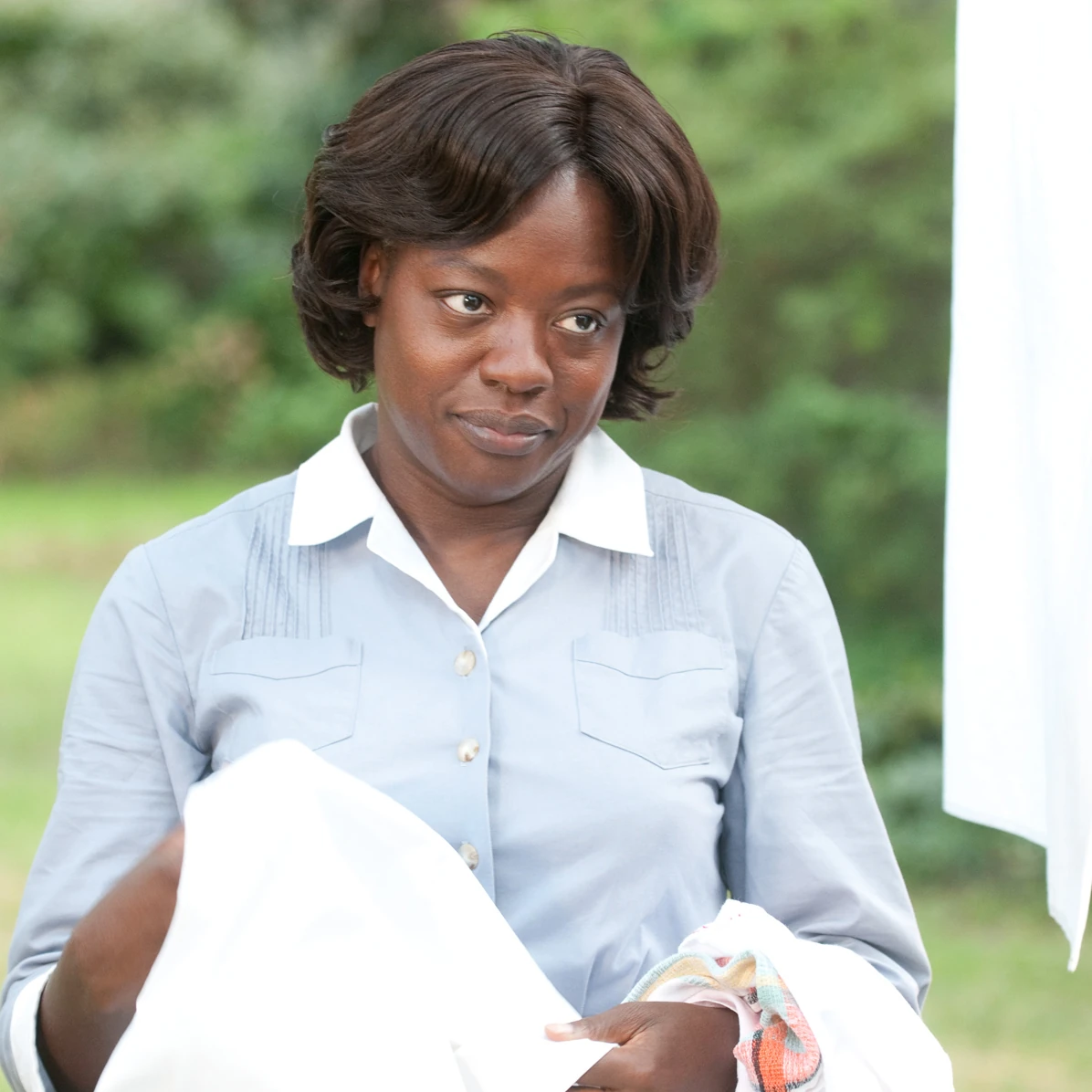
– Aibileen Clark from The Help Movie (Photo by Fandom)

Aminata reminds me of Aibileen from The Help. This character finds strength to move on, even after she loses her son. She teaches the children she raises that the colour of skin does not matter, but instead that love and kindness do. This is so much like Aminata because she too has lost a son (226), and is slowly regaining motivation to continue life with hope that one day she will get her freedom back. When Aminata arrives in New York (241), she reflects upon how odd it is that the whites go through so much trouble to take the blacks from their homes to simply work for them. She seems perplexed by the fact that they don’t just do their own work and that all of this slavery is just because of the colour of their skin. By the end of the book, both characters gain a new type of strength and somewhat defeat the cruelty around them. Interestingly, they both write books to do so. But the main thing that I noticed was that both of their story lines have the same situational archetype: the quest. 

The quest is a very common situation where the protagonist searches for something. In both The Help and The Book of Negroes, the main characters are searching for freedom. They wish to be treated as equals among the whites and they struggle to somehow be looked at with more respect.

In The Book of Negroes, everything Aminata does revolves around trying to find her way back home. And just like in many other stories, Aminata matures into a wise adult through the problems that arise along the way.

When Aminata is first captured by the slave traders (29), she tries to struggle free, despite being unsuccessful. When she is taken to America (106) and is forced to live among her owners, she does not once attempt to flee or fight seeing what happens to others as they do so. She chooses to watch, rather than to escape since she had seen that all of the others who struggled to fight free got killed. When she arrived at Lindo’s home, she said “I had learned that there were times when fighting was impossible, when the best thing to do was to wait and to learn” (379). Aminata’s journey taught her patience, which made her a wiser woman since every time she chose to wait, she was able to gain knowledge from her experiences. This typical archetypal situation is added to this novel to show how our life experiences will always teach us to be wiser, no matter how much pain they may cause us to endure along the way.

Aminata Patiently Living Among the Whites in the 2015 Series (Photos by African Photo Productions)

I think this is when I should mention that Aminata has two crescent moons indented on her face. These moons are forever a part of Aminata and they represent where she comes from. When Sam Fraunces meets Aminata, he says, “From the moons on your face, I suspect that your journey began long before Charles Town” (247). It never says what the moons actually represent for Aminata. All that is known is that everyone from her village had these moons on their faces and that they were symbolic for her people. When I looked up what moons are supposed to symbolize, I discovered that it’s actually a feminine symbol (Michalak). It also is supposed to represent the rhythm of time since the moon is an entity that is constantly changing. The new moon symbolizes infancy, the crescent is youth, and the full moon represents maturity. Since Aminata has crescent moons, this marking on her face could be symbolic of how precious childhood is. It could symbolize how strong she is as a woman and how she has time on her side. This could have religious meanings too… but, for now, I’m going to say that these moons probably were chosen by Hill to represent her incredible power. Just like the moon is always there, no matter if it’s night or day, Aminata’s undying strength will always be there deep within her.

I also think that these moons could reflect Aminata’s inner knowledge since the moon controls the seasons, the rains and the waters (“What Does the Moon Symbolize”). Either way though, this symbol on her face seems to represent her strength and femininity, all while highlighting her childhood innocence and present wisdom. It’s quite a marveling and perfect symbol to put on a heroine’s face, if you ask me!

– Aminata Diallo’s Crescent Moons (Photo by CBC)

The Powerful Words of an African

It’s been so many years since I read a book where every single word seemed to matter. The first time I picked up “The Book of Negroes,” I read for 5 hours straight and when I put it down, I was left with feelings of disgust, sadness, admiration and love all at the same time. It was a beautiful piece of art, yet it was utterly painful to read at times.

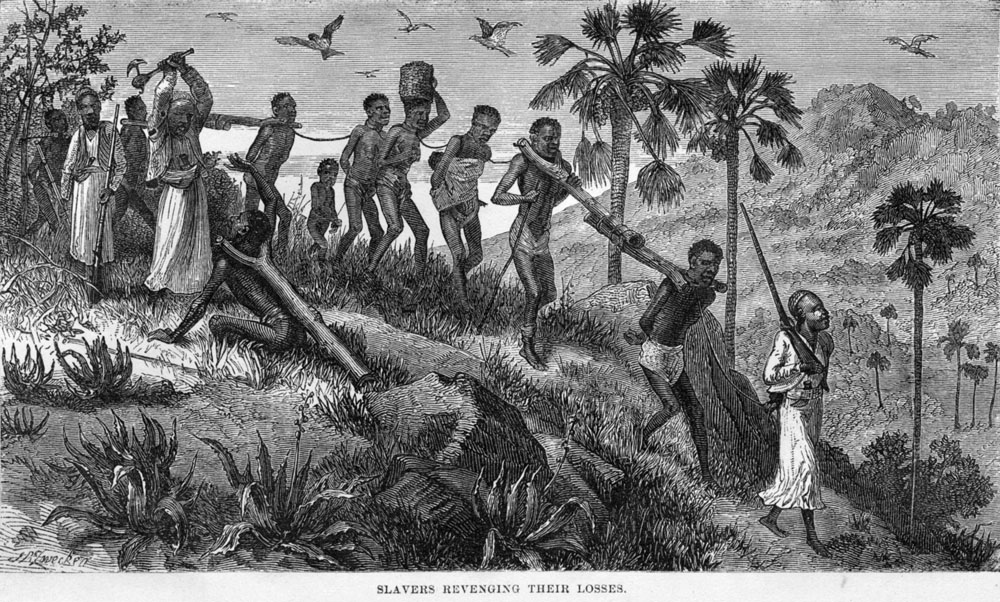
The first bit of the story takes place around the year 1750 when eleven-year-old Aminata Diallo is stolen from her African village in Bayo. She is sent across the ocean to America where she is sold into slavery on a South Carolina indigo plantation. Aminata slowly adjusts to plantation life in the Carolinas and she experiences sickening violence at the hands of the man who owns her. 

Perhaps it’s because I’m a Christian or perhaps it’s because of the way I was raised, but when I read this story, I instantly felt a type of pain I’ve never felt before. I had endless questions going through my mind… How can a person just take someone else and throw them overboard as if they were some old rag? Since when did human beings get so cruel with each other? This type of ruthlessness isn’t an accident. How can this even be justified? How can we explain these acts of sheer inhumanity and what does that even say about us, humans? Why are we capable of this kind of violence? 

Video of how slaves were thrown overboard from the movie Amistad.
“There is neither Jew nor Greek, there is neither bond nor free, there is neither male nor female; for ye are all in one Christ Jesus.” (Photo of Phillis Wheatley by Cokesbury)

As a Christian I’ve always believed that every human being, woman, or man, black or white, is made in God’s image. All people were created equal by God’s love and are free, destined to live a life of peace. All people are supposed to be accorded the same freedom and dignity. Slavery was, with no doubt, considered a sin to me. 

As a child, my parents also always enforced respect. Respect meant that you were to accept somebody for who they were, even when they were different from you or when you didn’t agree with them. Respect was needed to show others that you appreciated their knowledge and wisdom. My mother would tell me that this simple concept is one of the many things that lives on after we die.

Respect will never be forgotten, she would say.

Stealing children from their homes, starving them, beating them, forcing them to work for you and raping them breaks every moral I was ever taught to have. There is no respect there. There is not even a bit of shame or mercy. I believe this is what made reading “The Book of Negroes” so difficult for me. I just couldn’t understand that all of this torturing was just because of the colour of someone’s skin. It seemed unreal.

Interestingly though, I’ve come to feel very connected to Aminata. It might be because my mom also delivers babies, like hers did, or perhaps it’s the fact that both of us love languages or that her parents taught her the same things my parents taught me, but I feel so much love toward her.

There was a part in the book where her father said to her, “You must learn to respect,” and Aminata responded with “But I do not respect her.” Her father replied with,

“Then you must learn to hide your disrespect” (Hill 21). 

I had the exact same conversation with my parents once and I understood Aminata’s way of thinking. She was always direct and loved to ask questions. However Aminata learned quickly to hide many of her feelings. If she had not, she would not have been able to survive the journey. She understood that if she disobeyed white people, she would be punished or even killed. I think this is why my parents taught me this. I came to realize that you must respect not only out of pure kindness, but with the knowledge that it may determine your safety.

Also when Aminata’s father told her,

“Fear no man and come to know him” (57),

this reminded me of how my mom used to tell me that there isn’t enough time in our lives to fear. She always would teach me to look at everything and everyone as if they were a closed book, waiting to be opened.

But what I think I loved the most about this first part of the story is that Aminata was represented as a character who never wallowed in self-pity – no matter what she endured. Lawrence Hill did not make the Negroes seem defenseless. He did not make them the “victims” in this book, but rather the “survivors.” Throughout the pages of this novel, Hill revealed himself to be a tenderhearted and compassionate author with pure disgust for barbarity. He is the type of person to see hope and freedom where others would only see loss and captivity. I loved his view on the world since I’m also the type of person to see the glass as being half full. I accept that there will always be disappointment, but I’m also the person who never loses hope. Hill shows this mentality when Aminata arrives in America and sees the slave auctioning and it makes me appreciate his writing even more. She says, “I vowed not to let the noises of the city drown out their voices or rob me of my past. It was less painful to forget, but I would look and I would remember” (190). Aminata wanted to remember everything so that she could later tell her story. This was definitely not easy for her, but she decided that she would be strong and fight. Hill’s idea to create such a brave character made me gain so much admiration toward him.

– Slave Auctioning Photo by West Angels

I also loved the descriptive way in which Hill wrote. He used so many metaphors and other literary devices in order to describe the story. For example, Aminata’s father tells her, “Words fly on wild winds from the mouths of sly people” (99). I found this effective since it really makes you imagine the words being thrown around by the winds and it portrays how sometimes you just can’t escape being affected by what others say.

– Degrading Advertisement Using Words Such as “Wench” (Photo by AlbanyGroup Archive)

I also liked how he was willing to use degrading language in his book even though it seemed to go against his original objective of criticizing slavery. For example, Aminata’s owner in South Carolina, Robinson Appleby, rapes her and then calls her “African whore” (161). Hill uses many other very offensive terms in the novel and he does so in a way that somehow seems to reverse its negative effect. He uses this harsh language at just the right times so that instead of the Africans appearing victimized, all the reader can do is see how inhumane and disgusting the slave traders were. This style is also effective because it makes the story more real. It makes you feel as if you’re first-hand experiencing everything since none of the brutality seems to be hidden from you.

Reading this book really showed me that I’m an obsessive reader. I’m such a curious person that whenever I feel like I don’t know enough about something, I get an urge to look it up. Two weeks ago, my family drove to Pennsylvania and I had planned to read the book in the car, but halfway down the first page, I already wanted to look something up. I had so many questions about abolitionists, indigo plantations and the Great Smallpox Epidemic. I discovered that this, in a way, is my weakness as a reader since I get distracted so much.

But, I mean… I guess you could also call my curiosity a strength since it makes me analyze everything so carefully. It lets me really enjoy the text and make many predictions as I read along. For example, I remember being stuck on this one thing Aminata said at the very beginning. She said, “Some say that I was once uncommonly beautiful, but I wouldn’t wish beauty on any woman who has not her own freedom, and who chooses not the hands that claim her” (4). I reread this so many times since I just loved how it was written. This foreshadowed that she would be raped and it got me thinking about how and when it would happen. I had predicted it would be later on in the book by her owner once she was sold into slavery, but nevertheless I felt a bit helpless when I read it.

Overall, I just want to say that this is a beautiful and insightful novel and that I hope you all get a chance to read it one day.