There is something very compelling about podcasts that makes listeners feel like they have some sort of personal connection with the host (Backyard Media). When one listens to podcasts, they feel closer, and more connected, to the content offered than when they watch a video or simply listen to the radio. It may be because it seems like the host is right there beside them or perhaps because their voice enters the reader’s mind and makes them feel like they truly know each other. But, nevertheless, I’m no psychologist so I don’t know why our minds think this way toward this particular media, but what I do know is that I have recently discovered podcasts to be weirdly engaging.
I have never really been a person who listens to podcasts myself, but I’ve always been a person who adores mystery. So when our class had to listen to this murder mystery podcast, Serial, all I can say is that I was left extremely compelled.
The podcast (which is a completely true story) goes something like this: A popular and kind-hearted high-school student Hae Min Lee, is found dead one day after school and detectives have reason to suspect her ex-boyfriend, Adnan Syed for her murder. They arrest him six weeks later and to this day, he remains locked up in jail (Rajani).
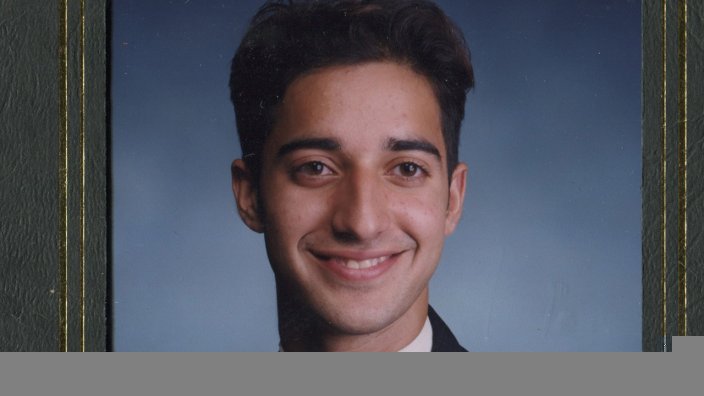
– Photo of Adnan Syed by SBS 
– Photo of Hae Lee (Top) and Adnan Syed (Bottom) by SBS 
– Photo of Hae and Adnan at Prom by SBS 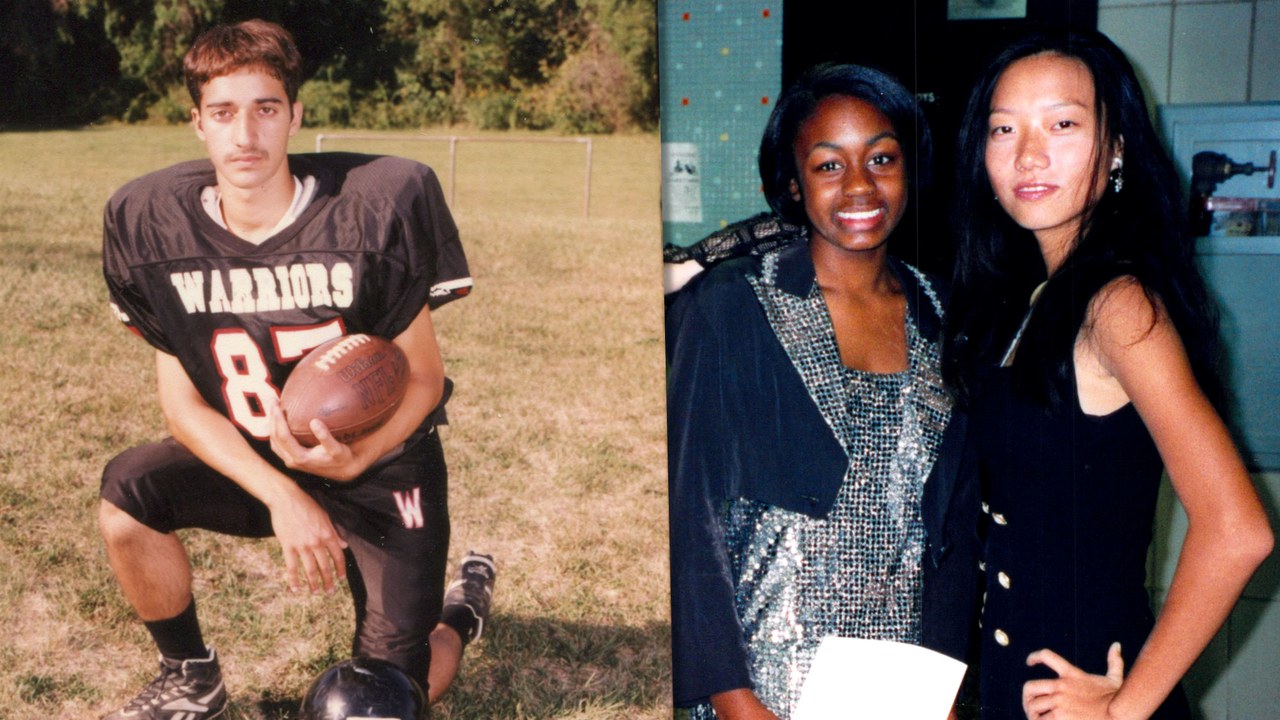
– Photo of Adnan at a Football Game (Left) and of Hae (Right) by HBO
This story somehow landed on Sarah Koenig’s desk (a well known journalist) and she decided to start this podcast, from her point of view, where she talks through her journey of uncovering the truth behind this case.
I love to unravel puzzles, and so I’m especially intrigued by the “who did what, where and why” questions that this podcast generates. At first, if I’m going to be completely honest, I thought it was a bit weird and uncomfortable how the whole podcast was in such an informal tone, considering it’s about a real murder. But I soon came to realize that that is what makes the podcast so intriguing and realistic. Hearing Sarah talk, just like any other person, not only made it easy to listen to, but made it seem like something that could happen right here in my own neighborhood. Had she been talking in old English, I for sure wouldn’t have felt like this story was true and I wouldn’t have felt as personally connected to it. It makes it more personal when it’s informal because you feel like the host is talking directly to you and this made Serial that much more thrilling.
With this in mind, what I found truly fascinating about this podcast was how I was able to remain impartial on the case. Usually I’m pretty judgmental and tend to have an opinion on who’s guilty in the first minute of a story, but with Serial, that was impossible for me. I kept changing my mind every single time there was a new piece of information, and perhaps, this is why I was so intrigued. I just couldn’t make up my mind if I believed Jay or not. Was Asia telling the truth? Why did Adnan seem so careless about the trial? There were endless questions going through my mind. But it turns out I’m not the only one who is obsessed with figuring out if Adnan is guilty… Hollywood stars have supposedly also been debating this for quite some time now so… I guess I’m not crazy.
But before I go even further, let me just say that the music was very captivating. I loved the instrumental, mysterious and dramatic sound always reappearing when a new piece of information was found. It made the story very thrilling and engaging.
Now I don’t know if it was the music, or the combination of it and the way in which Sarah spoke so lightly about things, but I realized just how twisted the truth can get.
I honestly have the worst memory in the world. I can’t imagine being asked about an event that happened 15 years ago and be expected to recall it with details. During school at least, my days all seem to be the exact same. If you were to ask me what I did three days ago, I probably wouldn’t know what to tell you. It seems pretty concerning that this whole trial is based on what people remember about this day, since the reality is that as more and more time goes by, the truth inevitably gets even more twisted. “Inaccuracies creep in: through imperfect perception, or biased inferences or conflation with details from other events” (Marsh and Greta).
Why then is it okay for the rest of someone’s life to be determined from distorted memories?
This makes me think that I need to keep a diary or something. Maybe if just one person could have remembered some small detail about that day, they might have had the missing piece to solve the puzzle. I thought that that would have been the case with Asia’s letters (below), but it seems that even that wasn’t enough proof. The sad truth is that it becomes hard to determine which facts are distorted and which are valid when it comes to using the said facts to determine a person’s future.


- Letters Written by Asia to Adnan (Photos by Serial)
And I think that as much as I loved listening to Serial, the truth is that I feared this whole situation would happen to me. I feared a person coming into my life with a psychopathic mind that I wouldn’t comprehend. I don’t necessarily mean I was scared of being murdered, but being the family of the victim is hard enough. I can’t begin to imagine how hard it would be to lose a daughter and I’m not sure I would like a podcast audience listening to her story. Of course it’s entertaining for us listeners, but when it’s your own family that’s being talked about, I would say to save the podcasts for fiction stories. I would hate for the whole world to have their own shifting theories of the crime. I would just want some closure, not something published, constantly reminding me of the death. It can be quite a devastating experience when a loved one dies and you need to be able to, “piece together your shattered emotions” (Johnson). I doubt you’d be able to do this with the whole world debating the one thing that’s causing you so much pain.
However, I can’t lie and say I didn’t enjoy listening to the podcast. Listening to a story rather than reading one for once, allowed me to imagine everything very vividly. There was this study that actually discovered that while we listen to podcasts, there are more authentic images being created in our minds and that we have high levels of emotional participation (Wen). When you listen to a story, the only thing left for you to do is to see it. When I read, I’m sometimes so distracted by reading the words and understanding the events that I can’t imagine the whole picture as clearly. When I listened to Serial though, I saw that it caused me to use my imagination to build pictures in my head of what I was hearing through my headphones. When that’s the only task you have to do, it really becomes easy to become imaginative.
Podcasts also allow you to gain a new perspective on the world since you hear different people speak and you start to consider things you’ve never considered before (Reamy). For example, when I heard how emotional Rabia was about the whole case, it made me realize that a death impacts so many more people than just the immediate family. Adnan was Rabia’s brother’s best friend and so I doubt they were extremely close, but she sounded so passionate about this case every time she spoke in the episode. Small things like this make you have a better understanding of how people think, since I have never had a death happen to anyone so close.
This said, I still think I’d prefer to read books. You can read at your own pace and stop as much as you’d like to think if you don’t understand something. I often had to pause the podcast while I was wathing it since she talked fast at some points and I would miss something or I wouldn’t understand a certain word someone said because of their accent or poor sound quality. I admit that it made it more realistic because in life you can’t always catch everything, but I like having a book to hold in my hands so that I don’t risk missing a single thing.

 Diana's Blog